Let's be honest. The idea of training a bird at home can seem either magical or utterly impossible. You see videos of parrots riding skateboards, and then you look at your own feathered friend who screams and flies to the back of the cage when you simply walk by. I've been there. I've also spent over a decade working with everything from stubborn Amazon parrots to tiny, nervous budgies. The gap between those two realities isn't talent—it's a misunderstanding of how birds learn.
Training isn't about dominance or making your pet obey. It's a conversation. It's about building enough trust that your bird chooses to participate. Done right, it deepens your bond, provides essential mental stimulation, and solves a host of common behavior problems like screaming or biting. The best part? You don't need a fancy studio. Your living room, a quiet corner, and about five minutes a day are your starting tools.
What You’ll Learn in This Guide
The Right Mindset & Essential Home Training Gear
Before you buy a single thing, get your head in the game. The most common failure point isn't the bird; it's the human's expectations.
Birds are prey animals. Their default setting is caution. Every interaction is filtered through that lens. So, if your hand moving quickly toward them has ever resulted in a grab (even a gentle one for a vet visit), that hand is now a predator. Your job is to re-write that story, one tiny, positive chapter at a time.
Now, for your home training toolkit. You don't need much.
- A Clicker: This small plastic box with a metal tongue is your most precise communication tool. It marks the exact moment your bird does something right. Consistency is its superpower—it always sounds the same.
- High-Value Treats: Not just seed mix. Find what your bird goes crazy for. For many, it's a piece of pine nut, a bit of walnut, a sliver of almond, or a bite of millet spray. Reserve these only for training.
- A Target Stick: A chopstick, a skewer with a colorful bead on the end, or even a capped pen. This gives you a way to guide movement without your intimidating hand.
- A Quiet, Safe Training Space: A portable perch (a T-stand) is ideal. It defines the "work area." The back of a chair or a play gym works too. The key is a neutral zone, not their cage (their safe fortress).
- Patience. Lots of it. This isn't a tool you can buy, but it's the most essential one.
Phase 1: Building Trust with a Scared or New Bird
If your bird flees from you, skip all talk of "tricks." Your only goal here is to become a non-threatening predictor of good things. This phase can take days, weeks, or even months. Let the bird set the pace.
The Proximity & Food Association Game
Sit near the cage, but don't stare. Read a book, scroll on your phone (silently), just be present. Do this for 15-20 minutes daily. Next, find a treat they love. Each time you walk past the cage, drop that treat into a special dish. Don't stop, don't look at them. Just: walk by = treat appears. You're building a neural pathway: human movement = yummy surprise.
When they start watching for you, you can progress. Sit by the cage with the treat in your hand, resting motionless on your lap or on the outside of the cage. Let them see it. Eventually, they may creep over to grab it. The moment they do, don't move a muscle. Success!
The First "Ask": Target Training Through the Bars
Before your hand ever enters the cage, use the target stick. Present it through the bars. Most birds will peek at it. The instant their beak touches it, CLICK (or use a consistent verbal marker like a tongue click "Good!") and offer a treat through a different part of the bars. Repeat. You're now having a structured, positive conversation. This builds confidence for the bigger step: stepping onto your hand.
Phase 2: Clicker & Target Training – Your Foundation
With some trust established, move to a neutral area like the T-stand. First, "charge" the clicker. Click-treat, click-treat, a dozen times in a row. No behavior required. You're just teaching: click = treat is coming.
Now, introduce the target stick near them. The goal: touch the tip with their beak. Most will investigate out of curiosity. CLICK the nanosecond beak touches stick, then treat. Practice this until they deliberately touch it when you present it.
This is powerful. Now you can "ask" them to move anywhere. Want them to step up? Hold the target stick just above your hand so they have to step onto your hand to reach it. CLICK for the touch, treat. You've just guided them onto your hand without force. This is the cornerstone of all voluntary cooperation.
| Common Behavior | How to Shape It with Target/Clicker | Beginner Pitfall to Avoid |
|---|---|---|
| Stepping Up | Target onto your hand. Click for touch, treat on your hand. | Moving your hand away as they step (makes them lose balance). Hold steady. |
| Turning Around | Target stick in front of beak, slowly move it in an arc around their body so their head follows it. Click when they complete the turn. | Moving the target too fast. Go at a snail's pace. |
| Stepping onto a Scale | Target onto the scale. Click/treat for any interaction, then gradually require a full step. | Weighing them under stress. If they fly off, go back a step. |
| Going Back into Cage | Target deep inside the cage. Click/treat when they enter. Makes cage re-entry a game, not a chase. | Closing the door immediately after. Give an extra treat after the door is shut to maintain trust. |
Phase 3: Teaching Popular Tricks & Useful Behaviors
Once targeting is solid, the world opens up. Tricks are just chains of simple behaviors. Here’s how to build two popular ones.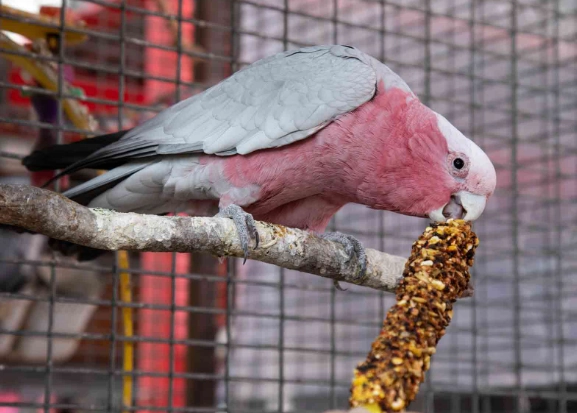
How to Teach "Wave"
This is usually a bird's first "trick." Ask for a target touch. When they lift their foot to step toward the stick (cockatiels and parrots often do this), CLICK at the exact moment the foot is lifted, and treat. Ignore the beak touch this time. You're now selectively reinforcing the foot lift. After a few repetitions, they'll lift their foot higher when they see the target. You can then fade the target stick and just present your finger—they'll lift their foot to "wave" at it.
Teaching a Vocalization or "Talking"
You can't force a bird to talk, but you can reinforce attempts. When they make a sound that even vaguely resembles your desired word (like "hello"), immediately respond with enthusiasm, eye contact, and a treat. Be consistent with the word you want. They learn through association. If they whistle and you love it and give them attention, you'll get more whistles. If you want words, reward the mumbles that sound word-like.
Troubleshooting Common Home Training Roadblocks
It's never a straight line. Here’s what to do when you hit a wall.
The bird is suddenly afraid of the clicker. You probably clicked too close to their ear or at a volume that startled them. Muffle it in your pocket or switch to a soft verbal marker like "yes" or "good."
They were doing great, then regressed. This is normal. Birds have off days, get hormonal, or get spooked by something you didn't notice. Go back to the last step they were confident at and rebuild from there. Never punish; just take a step back.
They bite the target stick or your hand. They might be over-excited or frustrated. End the session immediately but calmly. Next session, make the criteria easier so they succeed quickly. Biting often means the task is too hard, or the session is too long.
They only work for treats, not praise. In the beginning, that's fine. Over time, start to vary the reward—sometimes a treat, sometimes head scratches (if they like them), sometimes enthusiastic verbal praise. This creates a more resilient learner. Research in applied animal behavior supports variable reinforcement schedules for maintaining behaviors.

Join the Conversation