Quick Guide to Turtle Tank Maintenance
- Why Your Filter is Your Best Friend (And How to Choose One)
- The Nitty-Gritty: Your Real-World Turtle Tank Cleaning Schedule
- The Invisible Killers: Water Parameters You MUST Monitor
- Fighting the Green Menace: Algae Control That Actually Works
- Basking Area & Equipment: The Dry Side of Maintenance
- Answering Your Turtle Tank Maintenance Questions
- Putting It All Together: A Maintenance Mindset
Let's be honest. When you first brought that little red-eared slider or painted turtle home, the tank probably looked fantastic. Crystal clear water, maybe a cute little plastic palm tree. Fast forward a few weeks, and you're staring at a slightly greenish, murky world that smells... well, like a pond. You're not alone. I've been there. The truth is, turtle tank maintenance is the single most important, and often most misunderstood, part of keeping your aquatic friend healthy for decades.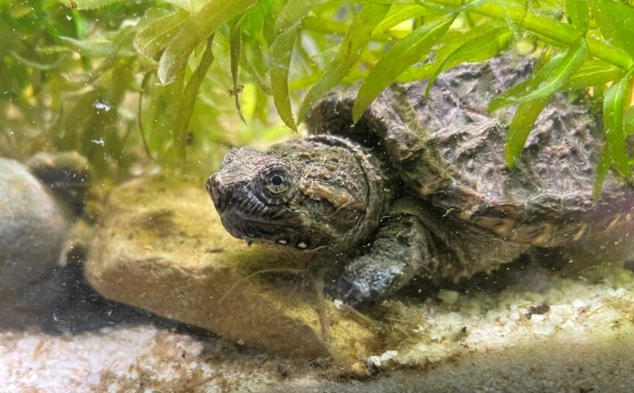
It's not just about dumping out dirty water. It's a whole system. Think of it like running a tiny, self-contained lake in your living room. You're in charge of the weather (heat and light), the water treatment plant (filtration), the landscaping (substrate and decor), and the waste management. Get one part wrong, and the whole ecosystem suffers. Your turtle might stop eating, develop shell rot, or just seem lethargic.
Why Your Filter is Your Best Friend (And How to Choose One)
If you take away one thing from this guide, let it be this: buy a filter rated for at least three times the volume of your tank. Turtles are messier than fish. Much messier. They eat in the water, poop in the water, and shed skin in the water. A filter that's "just enough" for a fish tank will be utterly overwhelmed in a turtle habitat.
You've got a few main types. Hang-on-back (HOB) filters are common starters, but for anything larger than a small juvenile tank, they struggle. Canister filters are the gold standard for serious aquatic turtle tank setup. They hold more media, provide superior mechanical, chemical, and biological filtration, and are usually quieter. Internal filters can work for hospital tanks or very small setups, but I rarely recommend them as a primary filter.
The magic happens in the biological media—the ceramic rings, bio-balls, or sponge sections. This is where beneficial bacteria live. They break down toxic ammonia (from turtle waste) into nitrite, and then into less harmful nitrate. This cycle is everything. Killing these bacteria by, say, rinsing your filter media in chlorinated tap water, is one of the biggest mistakes you can make. Always rinse media in a bucket of old tank water you've removed during a water change.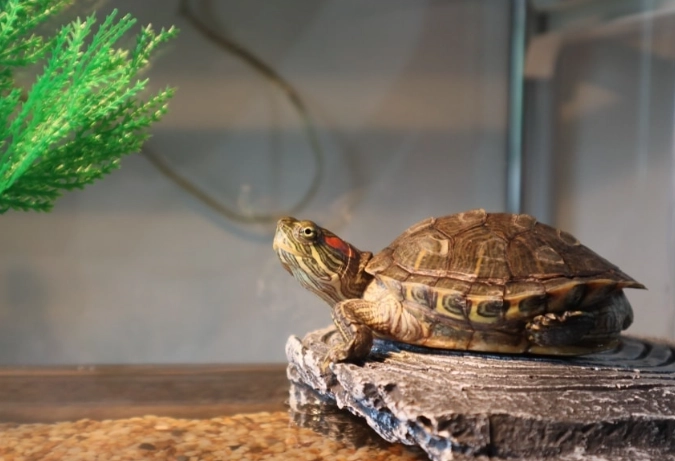
Canister Filter Media Setup: A Practical Layering Guide
How you stack the media in a canister filter matters. Here’s the order I’ve found works best, from water intake to output:
| Layer Order (Bottom to Top) | Media Type | Purpose | Maintenance Tip |
|---|---|---|---|
| First (Bottom) | Coarse Foam/Pad | Catches large debris (plant bits, big waste particles). | Rinse every 2-4 weeks in old tank water. |
| Second | Fine Polyester Floss | Polishes water, removing tiny suspended particles for clarity. | Replace when clogged (often every 2-3 weeks). This is your "polishing" stage. |
| Third | Biological Media (Ceramic Rings, Bio-Balls) | Home for beneficial bacteria. The heart of the nitrogen cycle. | NEVER replace all at once. Gently rinse in old tank water only if flow is impeded. This media lasts years. |
| Fourth (Top) | Chemical Media (Activated Carbon, Purigen) | Removes odors, discoloration, and some dissolved organics. | Replace per manufacturer instructions (carbon monthly, Purigen can be regenerated). Optional but helpful. |
See, the water hits the mechanical stages first, getting the gunk out before it reaches and clogs the precious biological stage. This simple order can double the time between major filter cleanings.
The Nitty-Gritty: Your Real-World Turtle Tank Cleaning Schedule
Alright, let's get practical. What do you actually need to do, and when? A strict schedule prevents problems before they start. Here’s the breakdown I follow for my own 75-gallon tank.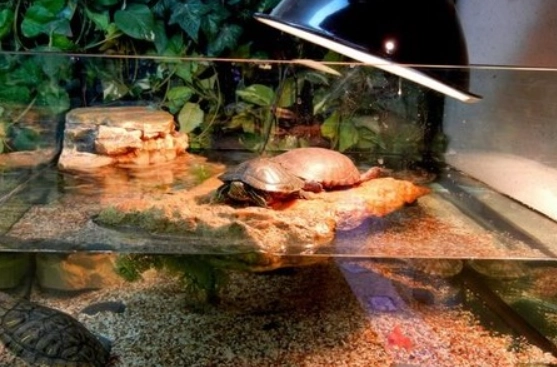
Now for the core weekly ritual. This is non-negotiable.
Weekly Partial Water Change: Every 7 days, I take out 25-50% of the tank water. The percentage depends on your stocking and filter power. Use a gravel vacuum (a siphon) to suck water out. Here's the pro move: vigorously stir up the substrate with the vacuum head as you go. This pulls the settled waste out from the bottom before it dissolves into the water column. It’s the single most effective thing you can do for water quality. Refill with dechlorinated water that’s close to the tank temperature. Pouring cold water on your turtle is a great way to cause stress and respiratory infections.
Why not 100% water changes? You’d crash your nitrogen cycle and shock your turtle.
Monthly Tasks: This is when you get a bit more hands-on. Clean the glass inside and out (a razor blade scraper works wonders on hard algae). Inspect and rinse off any decorations or artificial plants that have gunk on them—again, in a bucket of old tank water, not the tap. Check your filter’s impeller for debris if the flow seems weak.
Quarterly/Deep Clean: Every 3-4 months, plan for a more involved session. This is when you might fully service the canister filter, following the layering guide above. You might also give the basking platform a serious scrub (no harsh chemicals, please!). Test all your equipment—is the heater still accurate? Are the UVB bulbs still effective (they lose strength long before they burn out)?
The Invisible Killers: Water Parameters You MUST Monitor
You can't manage what you don't measure. Clear water doesn't mean safe water. Ammonia and nitrite should always be zero. If they're not, your biological filter isn't established or has crashed. Nitrate is the end product you manage through water changes; keep it below 40 ppm, but aim for under 20 ppm.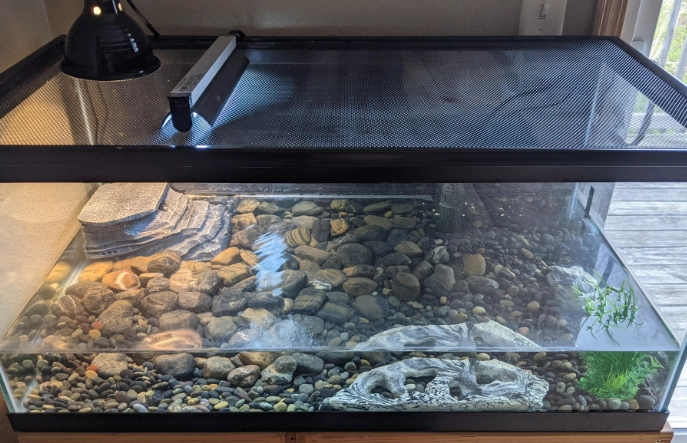
Get a liquid test kit. The strip tests are often inaccurate. Test weekly when you're starting out, then monthly once your tank is stable.
pH matters too. Most turtles do fine in a range of 6.5 to 8.0, but stability is key. Wild swings are worse than a slightly "off" but consistent number. If your tap water is very soft or acidic, adding a piece of crushed coral in your filter can help buffer and stabilize the pH.
Fighting the Green Menace: Algae Control That Actually Works
Algae happens. It's a plant, and it loves light and nutrients (nitrates and phosphates from waste). A little on the walls is normal. A pea soup tank is a problem.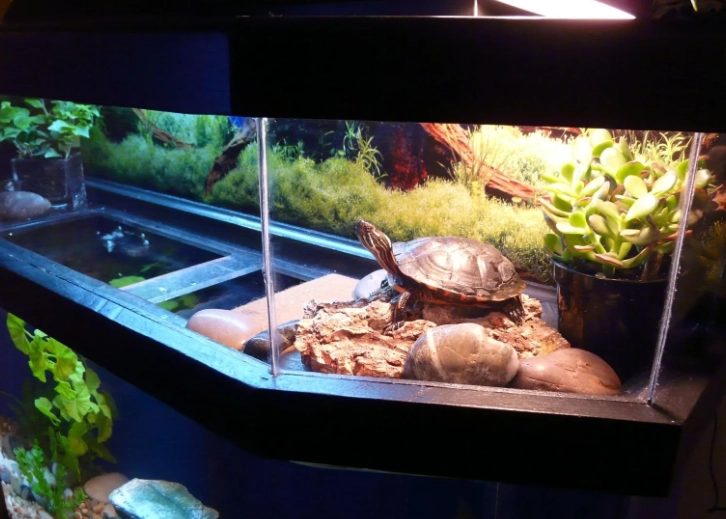
First, reduce the food source. Do more frequent water changes to lower nitrates. Don't overfeed your turtle—offer only what it can eat in 5 minutes, and remove leftovers.
Second, control the light. If your tank is near a sunny window, move it. Period. That's algae fuel. Don't leave the tank lights on for more than 10-12 hours a day. A simple timer plug is a lifesaver here.
For cleanup crew, forget about algae-eating fish. Most turtles will see them as expensive snacks. Instead, get yourself a good magnetic algae scraper or an old gift card (they work surprisingly well on acrylic tanks). For stubborn spots on decorations, a quick soak in a 10% bleach solution (followed by a VERY thorough rinse and dechlorinator soak) can reset them. Some people have success with UV sterilizers plumbed into the filter line, but they're an added expense.
Honestly, the best turtle tank cleaning strategy for algae is prevention: less light, less waste, consistent water changes.
Basking Area & Equipment: The Dry Side of Maintenance
We focus so much on the water, but the dry land is crucial. The basking platform needs to be completely dry and warm. Clean off any spilled food or waste weekly. Every month or so, take it out and scrub it down. Make sure it's sturdy—a collapsing platform can injure your turtle.
Your heat and UVB lamps are consumable items. The heat bulb you replace when it burns out. The UVB bulb, however, needs replacing every 6-12 months (check the manufacturer's guideline). The UV output degrades over time. Using an old UVB bulb is like giving your turtle a placebo—it provides no benefit for preventing metabolic bone disease, a common and devastating illness. Mark the replacement date on your calendar.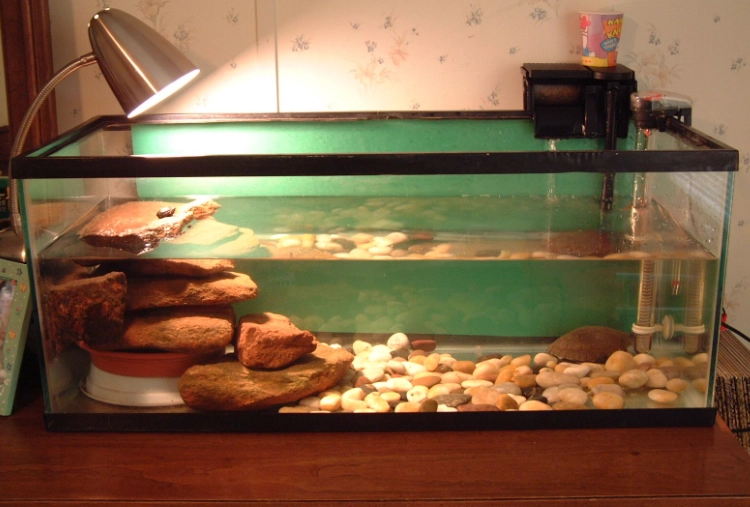
Answering Your Turtle Tank Maintenance Questions
Putting It All Together: A Maintenance Mindset
After years of doing this, I've found that successful turtle tank maintenance is less about following a rigid list and more about developing an understanding of the tiny world you're managing. You start to notice the slight change in water clarity, the minor reduction in your turtle's appetite, the way algae starts on one specific spot under the light.
It becomes a rhythm. The weekly siphon, the monthly filter check, the quarterly bulb swap. It's not a chore if you reframe it as taking care of a living being whose entire universe is that tank. The payoff is a vibrant, active turtle with a hard, smooth shell and clear eyes, living in a clean, beautiful habitat you can be proud of.
And honestly, there's something deeply satisfying about getting the system just right. The water is crystal clear, the filter hums quietly, the turtle basks contentedly. All is in balance. That's the goal. Start with a powerful filter, commit to those weekly water changes, test your water, and don't ignore the dry side. Your turtle will thank you for it—with a long, healthy life.
Got a specific maintenance headache I didn't cover? Drop a comment below. We've all been in the murky water, and sometimes the best solutions come from sharing our own messy experiences.



Join the Conversation